FORGOT YOUR DETAILS?

WILDLIFE IN ANTARCTICA

Discover the Frozen Continent’s Most Remarkable Creatures

Wildlife in Antarctica offers a fascinating glimpse into how animals adapt to some of the harshest conditions on Earth. Despite freezing temperatures, fierce winds, and months of darkness, the continent supports a diverse range of species that have developed remarkable survival strategies. Although Antarctica is the coldest and most remote continent on the planet, it is still home to an astonishing array of wildlife. From vast penguin colonies to colossal whales migrating through icy waters, its unique ecosystem continues to thrive against the odds.

Penguins, seals, whales, and seabirds form a delicate, interconnected ecosystem that relies heavily on the nutrient-rich Southern Ocean and its abundant supply of krill. Studying wildlife in Antarctica not only deepens our understanding of resilience in extreme environments but also underscores the urgent need to protect this fragile ecosystem in the face of climate change.

PENGUINS OF ANTARCTICA

Penguins in Antarctica are some of the most recognizable and resilient animals in the world, thriving in a land of ice, snow, and extreme conditions. These flightless birds have adapted to survive freezing temperatures, powerful winds, and months of darkness, making them a symbol of endurance in the Southern Hemisphere. The continent is home to several species, including emperor, Adélie, chinstrap, and gentoo penguins, each with unique behaviors and habitats. From massive breeding colonies that stretch for miles to intricate courtship rituals, penguins in Antarctica play a vital role in the region’s ecosystem.

Beyond their charm, penguins in Antarctica are key indicators of environmental health. They depend on sea ice and the abundance of krill and fish in the Southern Ocean, making them vulnerable to the effects of climate change and shifting ocean conditions. Observing their feeding habits, breeding success, and migration patterns helps scientists monitor changes in the Antarctic environment. For visitors and researchers alike, penguins embody the extraordinary balance of survival and community in one of Earth’s most challenging landscapes.

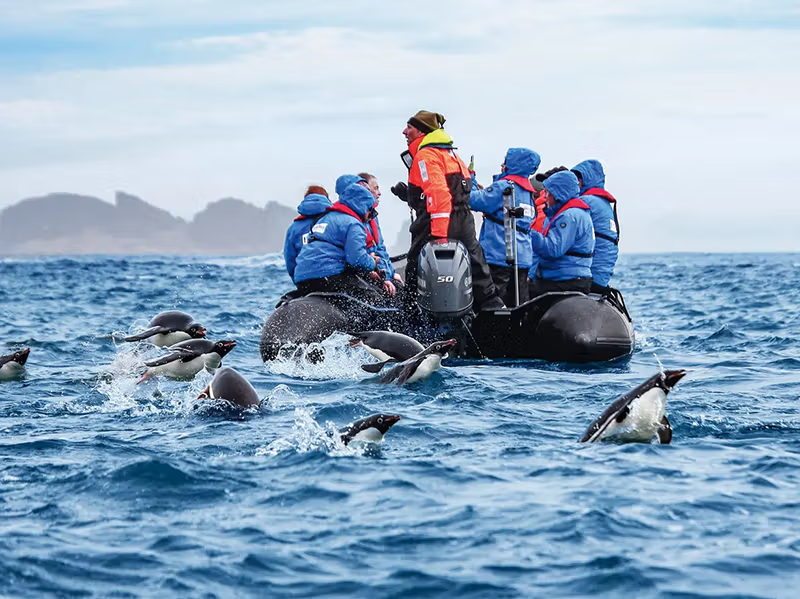
NATIONAL GEOGRAPHIC EXPLORER penguins jump into water

EMPEROR PENGUINS

The largest penguin species in the world, emperor penguins can grow up to 1.2 meters tall. They are famous for their endurance during harsh winters and for raising their chicks on the ice.

ADÉLIE PENGUINS

Adélie penguins are small but highly social. They gather in massive colonies along the coastline, often numbering in the tens of thousands.

CHINSTRAP PENGUINS

Chinstrap Penguins are named for the thin black line under their chin. Chinstrap penguins are among the most widespread species found on the Antarctic Peninsula and nearby islands.

SEALS OF ANTARCTICA

Seals of Antarctica are some of the most fascinating marine mammals on Earth, uniquely adapted to survive the freezing waters and icy landscapes of the Southern Ocean. The region is home to several species, including the calm and deep-diving Weddell seal, the abundant crabeater seal, the fierce leopard seal, and the large southern elephant seal. Each species plays a crucial role in the Antarctic ecosystem, feeding on fish, krill, and even penguins, while also serving as prey for orcas. Their thick blubber, insulating fur, and specialized behaviors allow them to thrive in extreme conditions where few other animals can survive.

Studying the seals of Antarctica provides scientists with valuable insights into marine biology, climate change, and ocean health. These seals depend heavily on sea ice for breeding, resting, and hunting, making them vulnerable to environmental changes caused by global warming. Conservation efforts are vital to protect their populations and the delicate balance of the Antarctic food web. For wildlife enthusiasts, observing seals in their natural habitat is one of the highlights of an Antarctic expedition, offering a rare glimpse into the adaptability and resilience of these remarkable creatures.

WEDDELL SEALS

Known for their calm nature, Weddell seals are one of the southernmost breeding mammals in the world. They can dive to remarkable depths in search of fish.

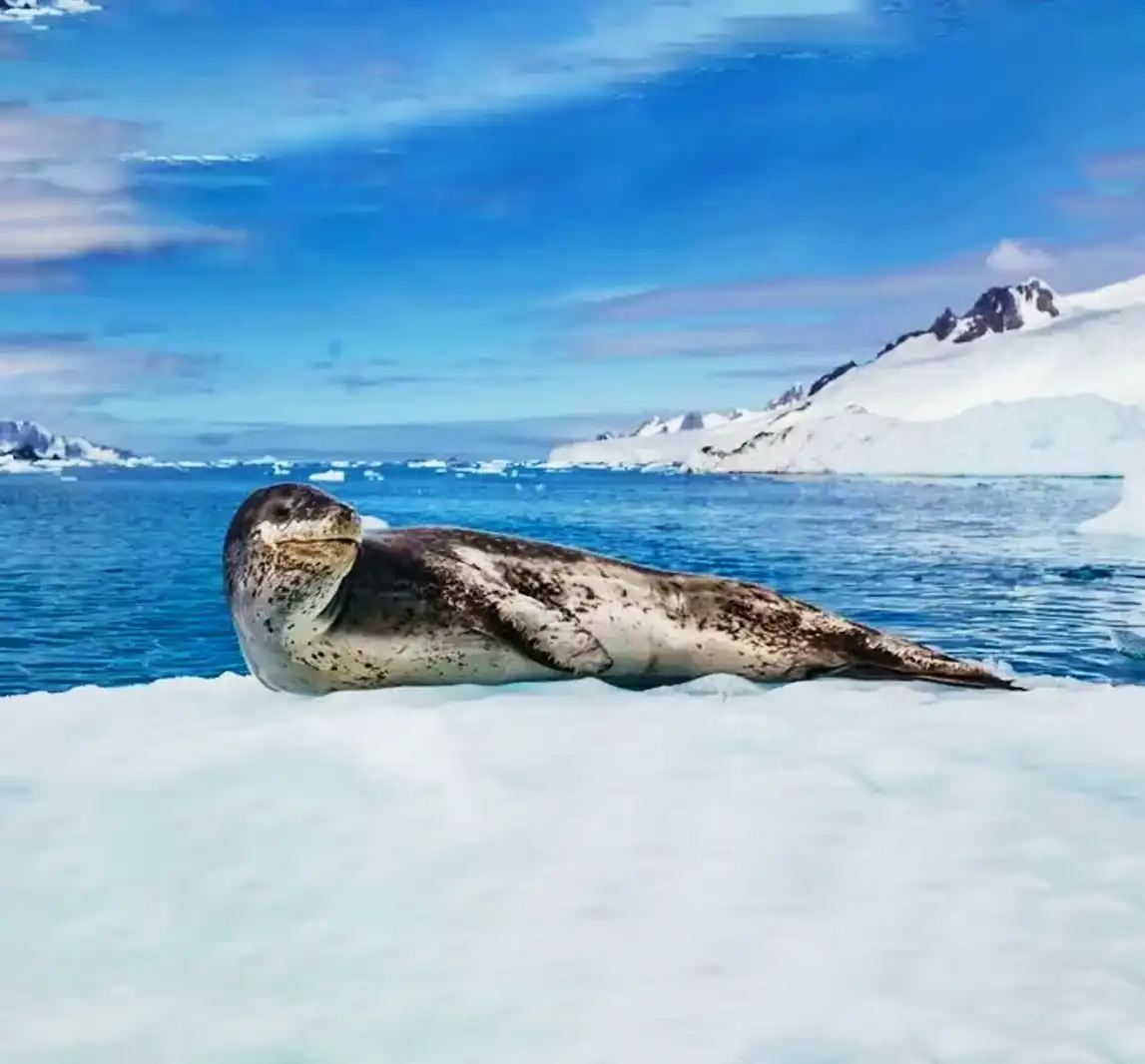
LEOPARD SEALS

Leopard seals are powerful predators, easily recognised by their long, reptilian heads and spotted coats. They hunt penguins, fish, and even other seals.

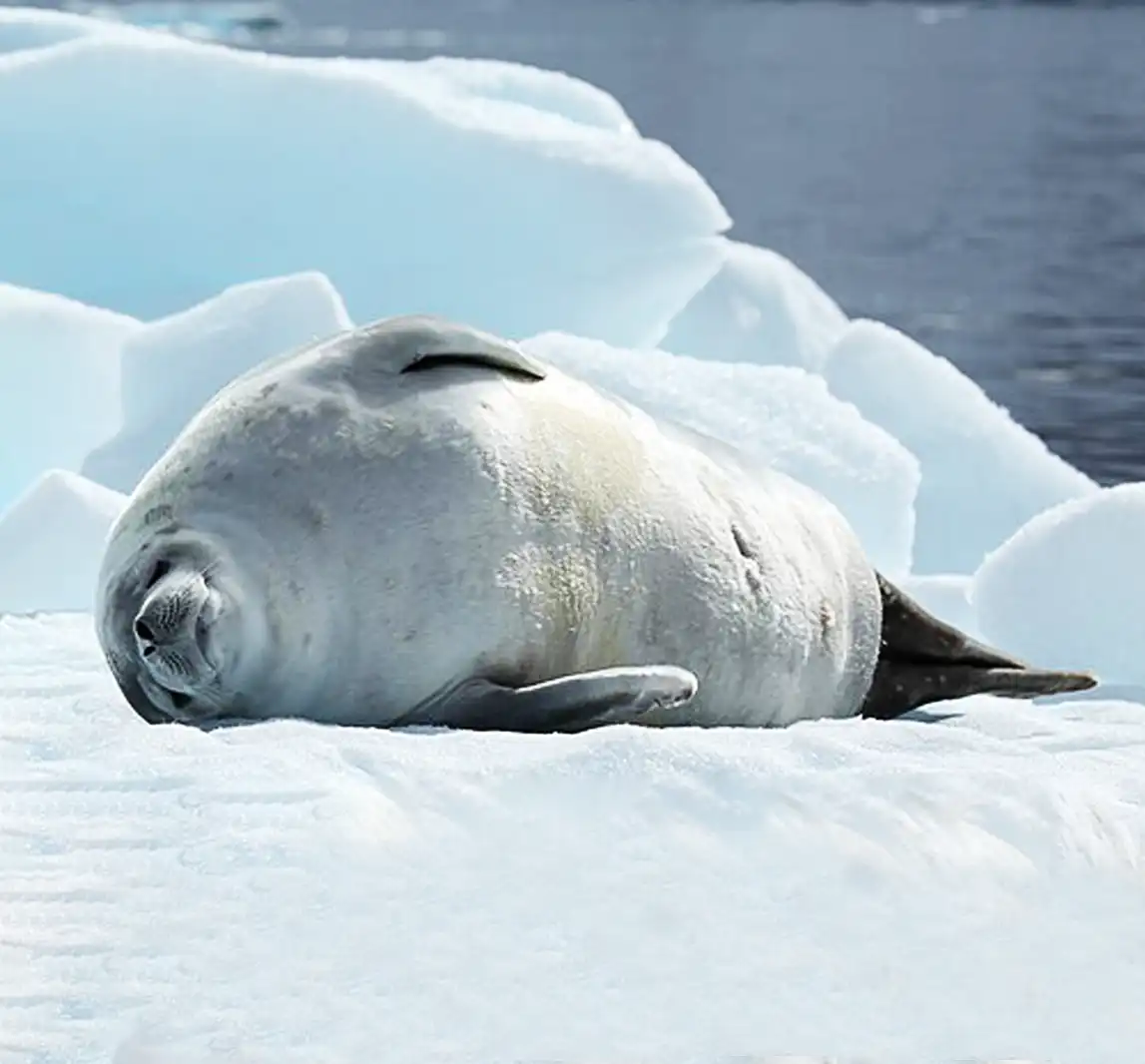
CRABEATER SEALS

Despite their name, crabeater seals feed mainly on krill. They are one of the most abundant large mammals on Earth, with millions living in Antarctica.

WHALES AROUND ANTARCTICA

Whales around Antarctica are among the most extraordinary marine animals on the planet, drawn to the nutrient-rich waters of the Southern Ocean. During the summer months, species such as blue whales, humpback whales, minke whales, and orcas (killer whales) gather in these icy seas to feed on vast swarms of krill. These whales play a critical role in maintaining the balance of the Antarctic ecosystem by regulating food chains and recycling nutrients. Their seasonal migrations, feeding behaviors, and social interactions make them a subject of great interest for scientists and wildlife enthusiasts alike.

Observing whales around Antarctica is one of the most unforgettable experiences for visitors to the region. Travelers on Antarctic cruises often witness humpbacks breaching dramatically, orcas hunting cooperatively, and blue whales—the largest animals ever to exist—gliding gracefully through the cold waters. Studying these species also provides essential data on the impacts of climate change, as shifting sea ice and changing krill populations directly affect whale survival. Protecting whales around Antarctica ensures the health of the Southern Ocean and preserves one of the world’s most remarkable wildlife spectacles.

BLUE WHALES

The blue whale, the largest animal ever known to exist, can be found feeding on krill in Antarctic waters during summer.

HUMPBACK WHALES

Humpback whales are renowned for their acrobatic breaches and haunting songs. They migrate thousands of kilometers to feed in Antarctica.

ORCAS (KILLER WHALES)

Orcas (killer whales), the top predators of the sea, travel in pods and display remarkable hunting strategies, often targeting seals and penguins.

BIRDLIFE BEYOND ANTARCTICA

Birdlife beyond Antarctica is incredibly diverse, extending far past the iconic penguin colonies that dominate the icy landscape. The Southern Ocean and surrounding islands are home to remarkable seabirds such as albatrosses, petrels, skuas, and terns, all uniquely adapted to thrive in this extreme environment. These birds travel vast distances across open seas, with species like the wandering albatross covering thousands of kilometers in a single journey. Each bird plays an important role in the Antarctic food web, feeding on krill, fish, and squid, while also helping scientists monitor changes in the ecosystem through their breeding and migration patterns.

Studying birdlife beyond Antarctica gives researchers valuable insights into climate change, ocean health, and global biodiversity. Many seabird populations are highly sensitive to shifts in sea ice, fishing practices, and environmental disturbances, making them key indicators of ecological balance. For visitors, spotting these birds in flight—whether it’s the soaring wingspan of an albatross or the determined scavenging of a skua—adds depth to the Antarctic experience. Protecting birdlife beyond Antarctica ensures the survival of these extraordinary species and safeguards the delicate ecosystems they inhabit.

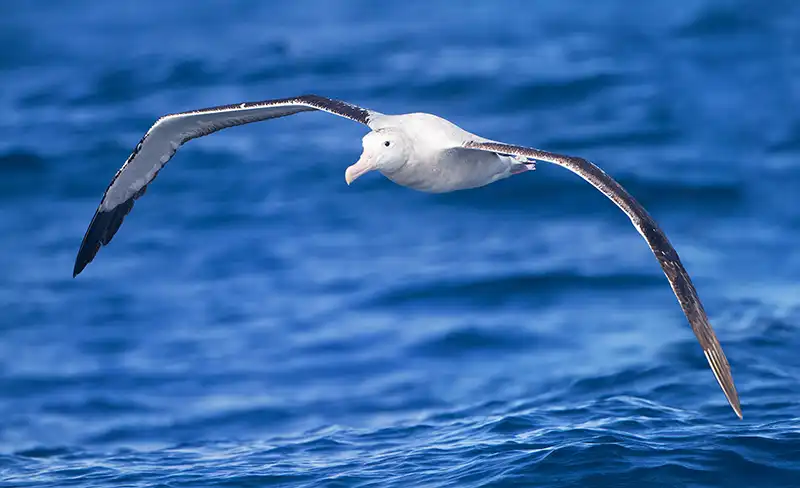
ALBATROSS

Albatrosses soar over the Southern Ocean with wingspans of up to 3.5 meters, covering vast distances in search of food.

PETRELS

Petrels are hardy seabirds found beyond Antarctica, known for their long-distance flights over the Southern Ocean and their adaptability to harsh, icy environments.

SKUAS

Skuas are aggressive seabirds of Antarctica, often seen around penguin colonies where they scavenge eggs and chicks as part of the region’s natural food chain.

WHY ANTARCTIC WILDLIFE MATTERS

Protecting the Fragile Balance of Life at the Bottom of the World

OCEAN ALBATROS Antractica Emperor Penguins

Biodiversity in Extreme Conditions

Wildlife in Antarctica shows how life can adapt and thrive in some of the harshest environments on Earth, offering valuable insights into evolution and survival.

zodiac-cruise-leopard-seal-petermann-island-ANTARCTICA-WORLD-EXPLORER
Ocean_explorer_Iceberg_penguins_jumping

Foundation of the Southern Ocean Ecosystem

Species like krill, penguins, seals, and whales form a delicate food web that supports not only Antarctic wildlife but also global marine biodiversity.

NATIONAL GEOGRAPHIC EXPLORER whale tail breach dive
National Geographic Antarctic ship and ice

Climate Change Indicators

Penguin populations, seal breeding grounds, and whale feeding habits provide critical data for understanding the impacts of global warming and melting sea ice.

FALKLAND ISLANDS penguin group ice peaks Antractica 21
HANSEATIC INSPIREATION penguins by zodiac

Nutrient Recycling

Whales and seabirds contribute to nutrient circulation in the ocean, supporting the productivity of marine ecosystems far beyond Antarctica.

ORCA breaching in front of penguins on Heritage Adventurer
The_Sylvia_Earle_Excursion_Orne-Harbour,-Antarctica,-Fiona-Wardle

Scientific Research Opportunities

Studying Antarctic wildlife helps scientists explore topics like animal behavior, oceanography, and the long-term effects of environmental change.

SILVER ENDEAVOUR blue water ship and kayaks Antarctica
Life_On_Board_The-Greg_Mortimer_Sea_Kayaking_Port_Lockroy_Antarctica

Global Conservation Importance

Protecting Antarctic species preserves one of the planet’s last great wilderness areas and safeguards the balance of our shared environment.

SILVER-ENDEAVOUR-Cruise FAQs slider
NATONAL GEOGRAPHIC RESOLUTION Bow view binoculars

Educational and Inspirational Value

Wildlife in Antarctica inspires global awareness about the importance of conservation and teaches future generations about the interconnectedness of nature.

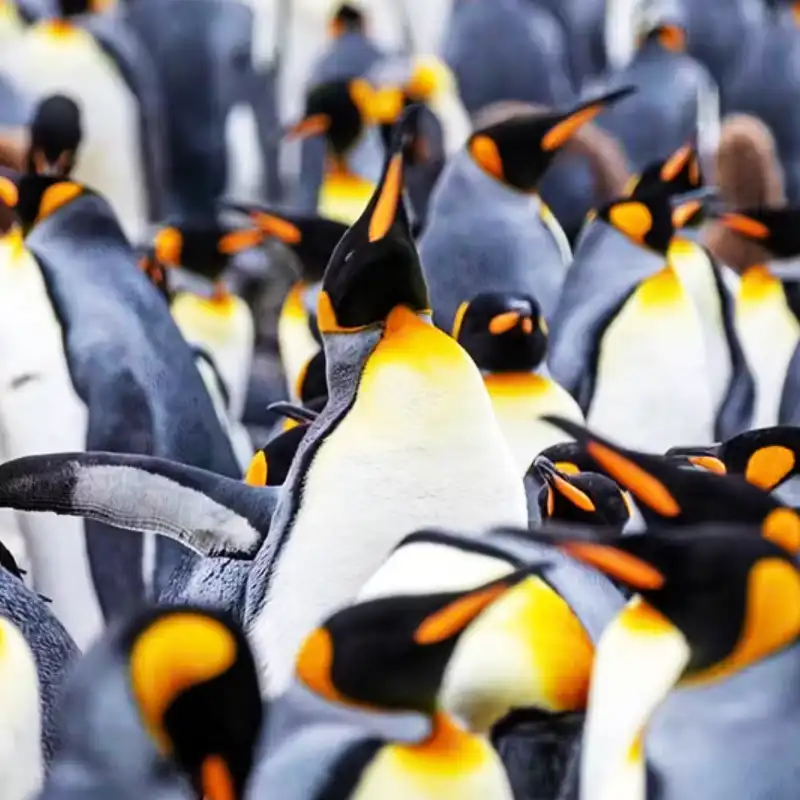
SOUTH GEORGIA penguins photography close up

EXPERIENCE WILDLIFE FIRSTHAND

Protecting the Fragile Balance of Life at the Bottom of the World

BIRDLIFE BEYOND ANTARCTICA

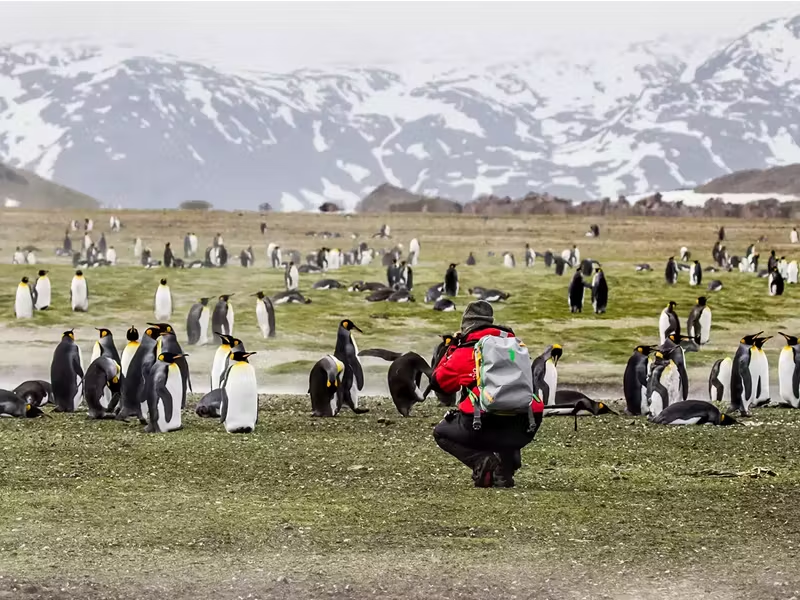
For many travellers, the chance to experience wildlife firsthand in Antarctica is the highlight of their journey. Standing among thousands of penguins, watching seals bask on the ice, or seeing whales breach in the Southern Ocean offers a connection to nature unlike anywhere else on Earth. Unlike documentaries or photographs, being there in person allows you to witness the raw beauty and behavior of these animals in their natural habitats, creating memories that last a lifetime.

When you experience wildlife firsthand in Antarctica, you also gain a deeper appreciation for the importance of protecting this fragile ecosystem. Guided expeditions ensure encounters are safe for both visitors and animals, while also promoting conservation awareness. From educational lectures onboard to respectful wildlife viewing on shore landings, each moment helps travelers understand how vital these species are to the planet. This immersive experience not only inspires wonder but also fosters responsibility toward safeguarding Antarctic wildlife for generations to come.

For more information on Wildlife in Antarctica or any other Antarctica information & cruise deals, call us now.

Call 1300 799 758 now. 

Available 7 days a week!

Sign me up for Travel Deals & Holiday Specials.

I want to travel more!

TOP